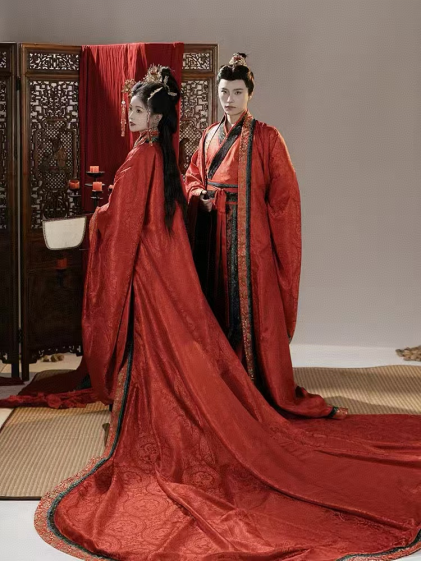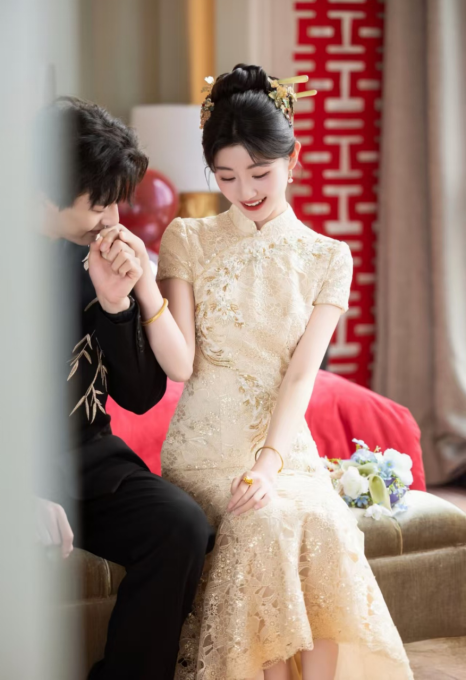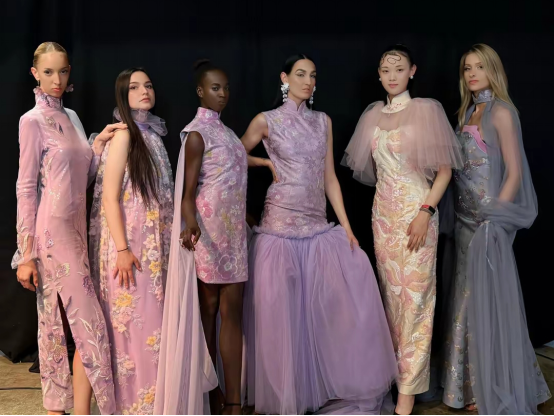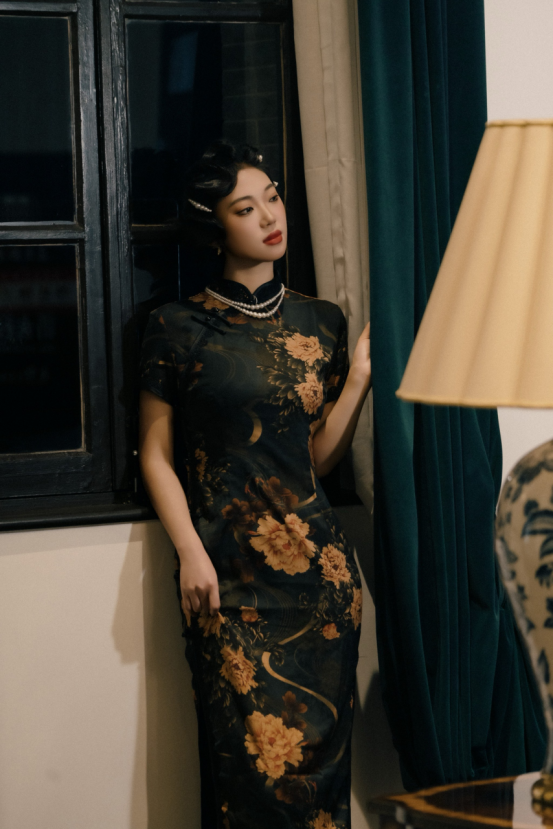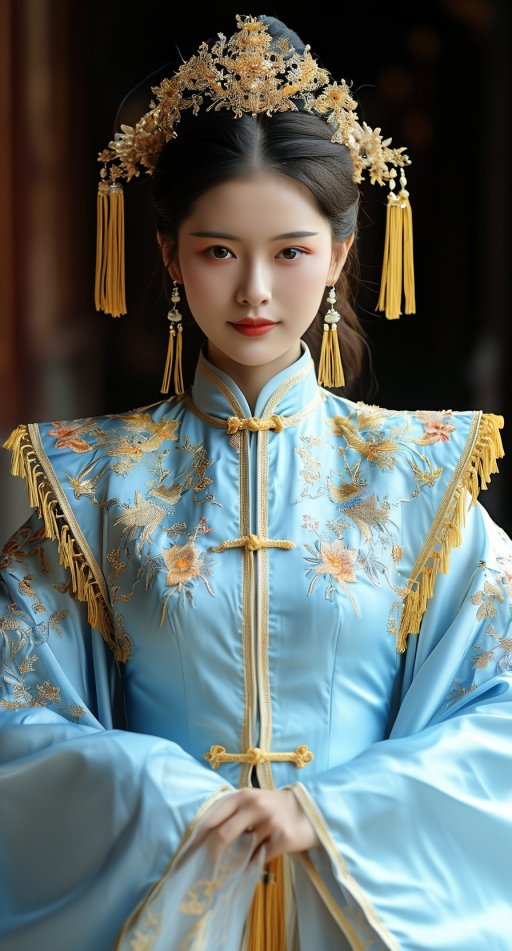
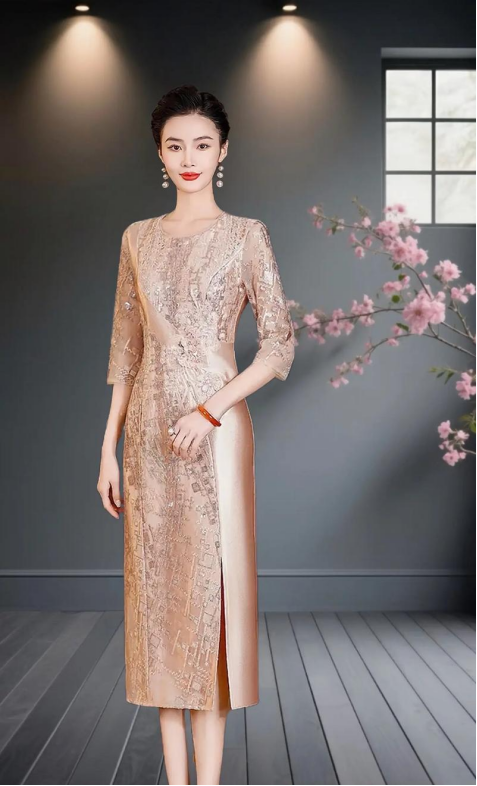
The qipao, a garment known as the “Chinese painting worn on the body,” has weathered a century of vicissitudes since the 1920s and quietly become a synonym for the elegant temperament of Oriental women. The uniqueness of the qipao lies in its new clothing style that integrates Chinese and Western elements. The aesthetic connotation it embodies not only includes the traditional Chinese cultural concepts and spiritual manifestations,but also incorporates the magical sense of sensuality from the West. It perfectly fits the reserved, generous yet passionate character of
Oriental women, deservedly a shining pearl in the history of Chinese costume development. Today, we will present the charm and value contained in the qipao from the perspectives of its fabric, color, and craftsmanship.
Different between Qipao vs Cheongsam
As we all know, both “qipao” and “cheongsam” refer to the same type of garment, but there is actually a slight difference between them. “Cheongsam” is derived from the Cantonese term “cheong sam” (meaning “long gown”), which initially referred to a long robe-style garment commonly worn by both men and women of the Manchu ethnicity in the Qing Dynasty. After the modification of the qipao in the 1930s, this term gradually came to specifically refer to the slim-fitting women’s qipao,spread to English-speaking countries through international exchanges in Shanghai, Hong Kong, and other regions. On the other hand, “qipao” is a direct transliteration based on Mandarin Pinyin, which more directly corresponds to the pronunciation of the Chinese term “旗袍” (qipao). With the rise of China’s international status, the frequency of using this transliteration in academic fields has increased.
The Fabric of the Qipao
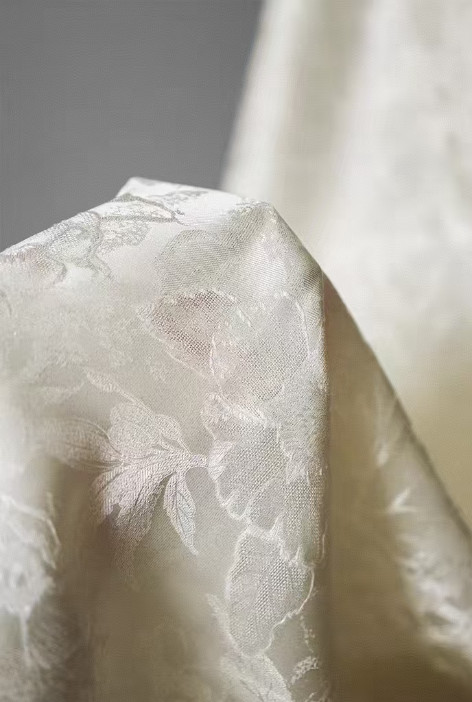
Fabric can be said to be the soul of the qipao, and it even determines the texture and wearing experience of the qipao. Nowadays, the fabrics used for qipaos range from natural fibers to modern blends. Traditionally, the core fabrics for qipaos are silk and
satin. Such fabrics are highly popular due to their luster, soft handfeel, and high breathability, and they are the main source of qipao fabrics. For example, silk fabric is suitable for making formal evening qipaos; its gorgeous texture and skin-friendly touch enable silk qipaos to have both aesthetic and practical functions. Brocade fabric can display various exquisite patterns through complex jacquard weaving techniques, and the beauty of these patterns highlights the luxury of the qipao.
Besides silk fabrics, Xiangyunsha stands out among cotton fabrics. Its characteristics of being breathable, smooth, and durable make it very suitable for making daily home-wear qipaos, and its elasticity can accommodate people of different body types. When autumn and winter come, fabrics with good warmth retention, such as wool or velvet, are often used for qipaos. The choice of qipao fabric varies with the seasons.
The Color of the Qipao
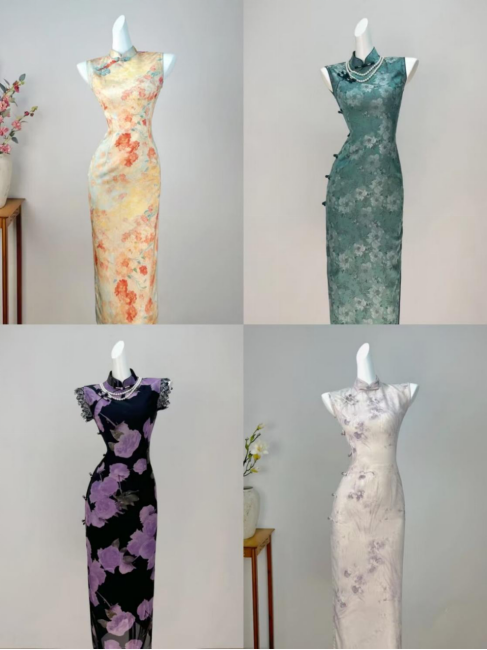
The color composition of the qipao has a complete visual language. In the early days, the colors of qipaos were relatively monotonous and strictly followed the feudal hierarchical color system. It was not until the Republic of China era that qipao colors flourished and witnessed a landmark color revolution. For instance, qipaos of this period appeared in bright and beautiful colors such as pale moon white, lotus root pink, honey beige, and lavender pink. The addition of these colors allowed the qipao to truly display its due beauty, and these touches of color outlined the most authentic feminine charm of Oriental women.
Later, the qipao adopted most of the traditional Chinese color systems. Through the matching of different colors, a unique color aesthetics of the qipao was formed. Colors such as vermilion, rouge, coral, crimson purple, dark blue, and pearl white were all applied to the qipao. Each color corresponds to the temperament of the wearer, embodying the concept of “using color to complement one’s temperament” in traditional Chinese aesthetics. In modern times, with the continuous expansion of the color system, more color palettes such as the Morandi color palette and mixed color schemes have been used in qipaos, making the qipao more in line with the aesthetic needs of contemporary people and showing infinite charm.
The Craftsmanship of Qipao Making
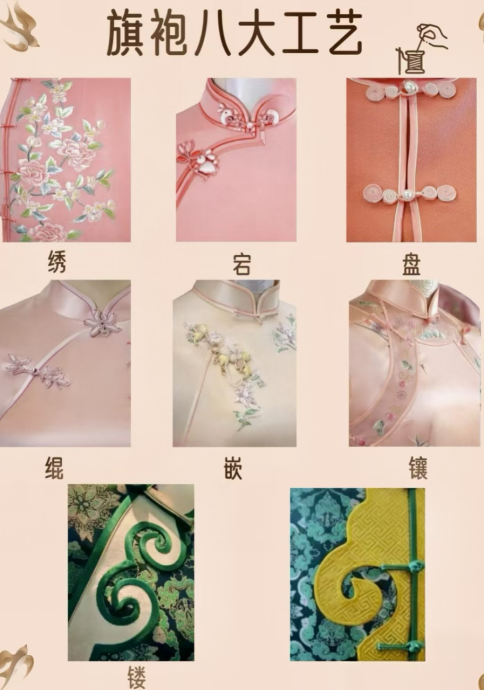
Making an exquisite qipao requires at least more than 50 crafting processes, among which the most core ones are eight: embroidery, dang (decorative strip), pan (button looping), gun (edge piping), qian (inserting), xiang (inlaying), lou (cutting), and diao (carving).
Among them, “embroidery” refers to the embroidery craft. On the basic white base fabric of the qipao, various patterns are embroidered on the solid-color fabric using traditional hand embroidery techniques, endowing the qipao with initial artistry and ornamental value and forming the most basic aesthetic texture of the qipao. “Dang” involves cutting solid-color silk satin into streamlined or wavy shapes, sewing them below the collar to form a three-dimensional outline at the edge of the collar, highlighting the shape-modifying effect of the qipao. As the name suggests, “pan” refers to pankou (traditional Chinese frog buttons), which are used to secure the qipao when worn. “Gun” is edge piping, which involves sewing and covering the edges of the collar and hem of the qipao to decorate the edges. “Xiang” is inlaying, which means sewing,inlaying a piece of fabric on the edge of the qipao to enhance the sense of layering of the qipao’s patterns. “Qian” is inserting: on the basis of inlaying, special fabric is ironed into strips and sewn between two fabric seams. “Diao” (carving) and “lou” (cutting) usually appear together; generally, fabric different from the base cloth is used to make special shapes, which are then sewn onto the qipao.
From the crafting processes of the qipao, one can understand how exquisite the qipao is, and thus truly appreciate the magnificent charm of the qipao in essence.
The Qipao in TV Dramas
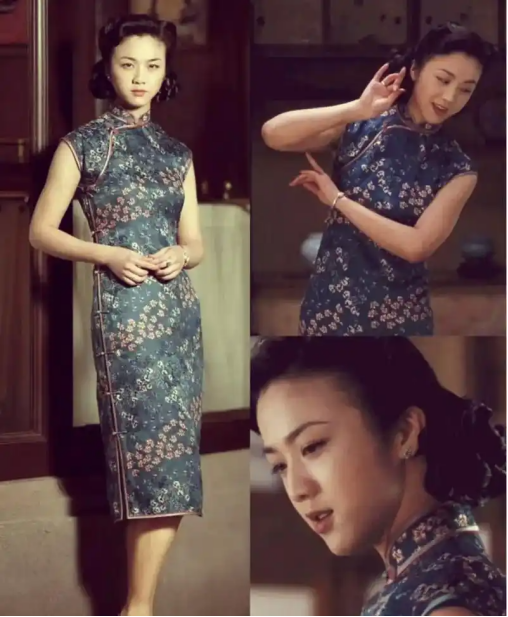
Nowadays, many film and television works contain elements of the qipao. The qipao has become an important visual symbol for character portrayal, conveying the atmosphere of the era. For example, in Lust, Caution, the female lead alone has 27 qipao looks, which accurately restore the qipao fashion popular in Shanghai at that time. Another example is Wong Kar-wai’s In the Mood for Love, which also uses qipao looks to unfold the narrative of character images, reflect the protagonist’s inner thoughts in different situations. There are many other film and television works with the qipao as a main element. The examples cited here just prove that the qipao, as a traditional garment, still possesses extraordinary vitality against the backdrop of the tide of modern development and remains a representative garment for Oriental women.