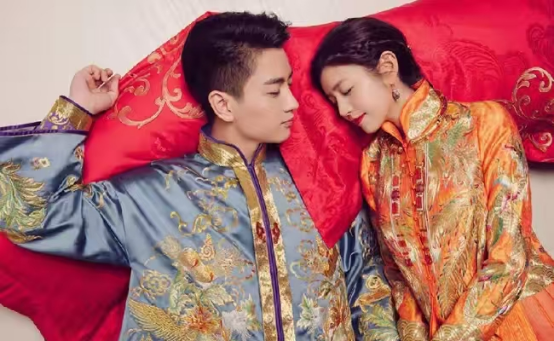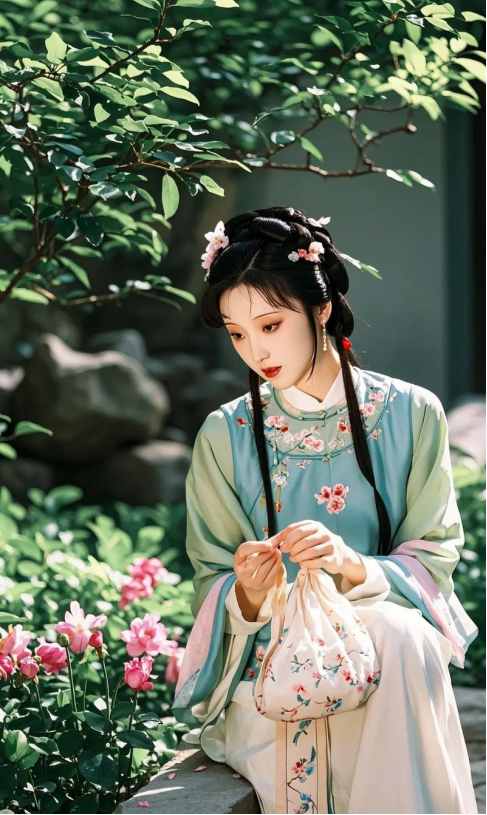
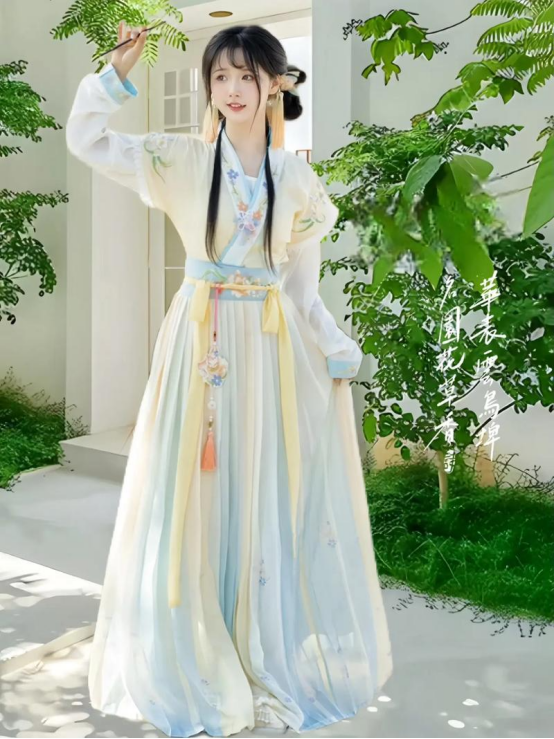
The most important structural feature of Hanfu is the “upper garment and lower skirt” system, which means the upper and lower parts are cut separately. The upper body wears a garment, and the lower body wears a “skirt” (called “Shang” in Chinese). This system is the oldest in the Hanfu system, and the Chinese word “Yishang” (clothes) comes from it.
Hanfu has a history of 4,000 years, and the “upper garment and lower skirt” system has existed for the same length of time. Hanfu embodies China’s reputation as a “nation of elegant attire”, “land of etiquette” and “splendid China”. It carries outstanding crafts and aesthetics such as dyeing, weaving and embroidery of China, and inherits more than 30 Chinese intangible cultural heritages and protected Chinese arts and crafts. Based on this system, many typical skirt styles have emerged over thousands of years of development, which constitute the integrity and aesthetics of the Hanfu system.

Hanfu skirts mainly have the following typical styles
Quju Skirt: It was common in the Qin and Han dynasties. Its general structural feature is a wrap-around shape similar to a skirt, with the characteristic of “continuous lapel and hooked edge”. A piece of backward-overlapping Quju style tightly wraps the whole body. Most Quju skirts are slim-fitting with no obvious patterns. They have a simple overall style but still highlight the figure and temperament.
Tang Dynasty Skirts
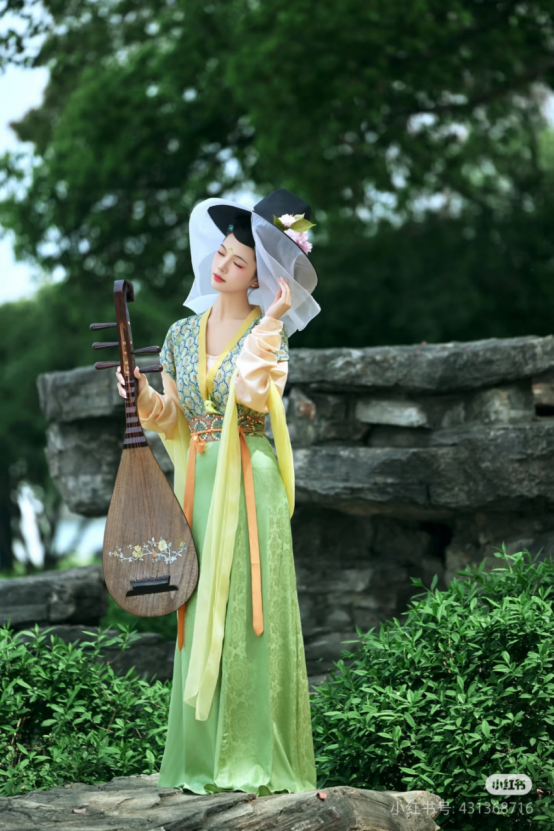
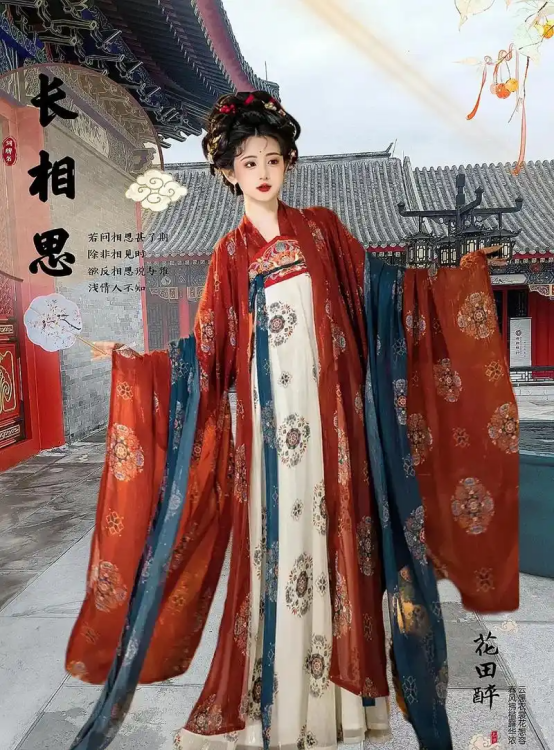
The second type is Tang-style Ruqun (jacket and skirt). Tang-style Ruqun is divided into chest-high Ruqun, waist-high low-neck Ruqun, etc. Chest-high Ruqun matches a cross-collar or front-opening jacket with an ultra-high-waist long skirt. The skirt hem can be up to 6 meters. Paired with a large-sleeved shirt, it fully shows the grand scene of the prosperous Tang Dynasty, and looks like flowing clouds when walking. The main feature of waist-high low-neck Ruqun is the U-shaped neckline, which highlights the collarbone and exudes the body’s charm in a unique way. It is paired with short-sleeved Banbi (half-arm jacket) over a long-sleeved base layer, creating a rich layering.
Song Dynasty Skirts
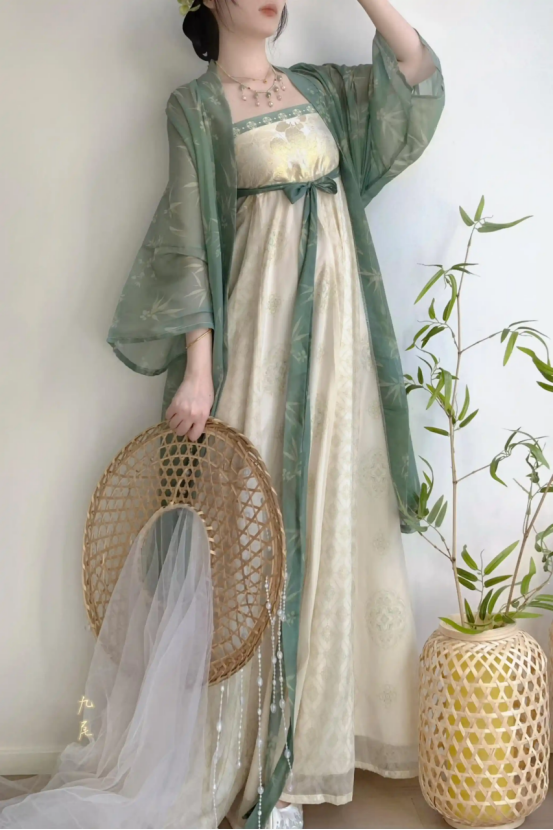
Then there are typical Song-style skirts. The main style features of Song-style skirts are elegance and practicality. Baidie Skirt is one of the representatives. Baidie Skirt is made of a single piece of fabric with full 顺褶(shunzhe) in the middle and smooth (unfolded) areas on both sides. It looks dignified when stationary, and the folds sway like water ripples when walking. Another Song-style skirt is Xuan Skirt, which consists of two overlapping skirt pieces for easy movement. “Xuan” refers to the basic style formed by piecing together trapezoidal fabric pieces. The diagonal cutting technique of Xuan Skirt can save fabric to a large extent, and the A-line skirt hem design has a good slimming effect.

Ming Dynasty Skirts
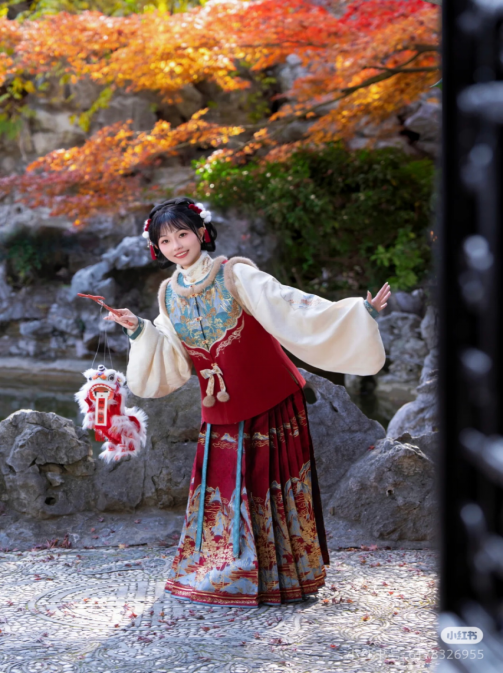
Ming-style skirts are also one of the typical Hanfu skirt styles and occupy an important position in the Hanfu system. The most typical and prominent style of Ming-style skirts is Mian Skirt. Mian Skirt has an overall dignified and elegant style. It is mainly composed of front and back smooth trapezoidal “skirt doors” and folded sides. It is usually decorated with dragon and phoenix, four-season flower patterns using brocade and gold-thread embroidery techniques. There are also many choices in terms of materials. Due to its wide applicability and public aesthetic appeal, Mian Skirt has become one of the most popular Hanfu styles nowadays, and many people’s first choice for going out in Hanfu is Mian Skirt.

How to Choose a Skirt
Of course, there are so many Hanfu skirt styles. To choose your favorite Hanfu skirt, the correct selection method is crucial:
First, match the style according to your figure. For plump figures, it is better to choose Ming-style long jackets with Mian Skirts or Ruqun. For pear-shaped A-line figures, Song-style Xuan Skirts or Baidie Skirts are preferred, which can well cover the figure’s shortcomings. For short figures, Tang-style chest-high Ruqun or Tang-style Hezi Skirt are better choices to enhance the overall visual height.
Second, dress according to the scene. For daily commuting, you can choose Song Mo (Song-style undergarment) with an outer jacket and Xuan Skirt, or a modernly improved Mian Skirt with a knitted sweater, which is lightweight yet dignified and formal. For grand occasions, you can choose a brocade Mian Skirt with a stand-collar jacket or a gradient skirt. You can choose bright and noble patterns but not too eye-catching ones.
There are many more typical skirt styles in Hanfu, and we still need to slowly explore the amazing beauty hidden in the thousands of Hanfu styles.