

Chinese clothing has a long history, dating back to primitive society. Historical records show that Youchao was the first to teach people to make clothes from leaves and fur. From the Xia, Shang and Zhou dynasties to the Qin and Han dynasties, through the Wei, Jin, Southern and Northern dynasties, Sui, Tang, Song, Yuan, Ming and Qing dynasties to modern times, each period has distinctive features that have attracted worldwide attention. Hanfu has so many elements. Today, let’s explore the unique charm of shoes in the traditional Hanfu system of China.
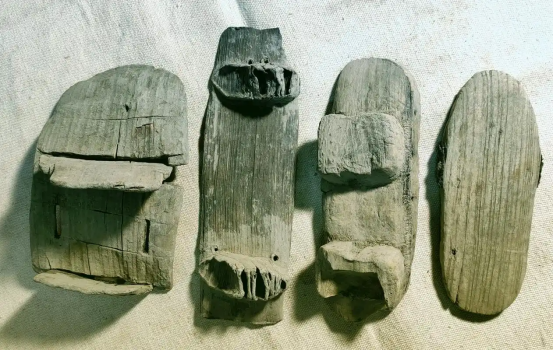
What materials were used for the earliest shoes?
In ancient times, shoes were made of animal skins. Therefore, there are many names for shoes, such as lv, ji, xue, xi, ju, etc. The earliest shoes were very simple. The ancients cut animal hides into roughly foot shapes. Then, they sewed them together with thin leather strips. These became primitive shoes.
With the development of society and the progress of the textile industry, materials such as cloth or silk were also used to make shoes, and combined with leather, hemp and grass, a large number of shoe products appeared. During the Yin and Shang dynasties, the style, craftsmanship and decoration of shoes were very exquisite. The materials and patterns had strict systems according to clothing. The shape and color of shoes in each dynasty changed with the form of uniforms.
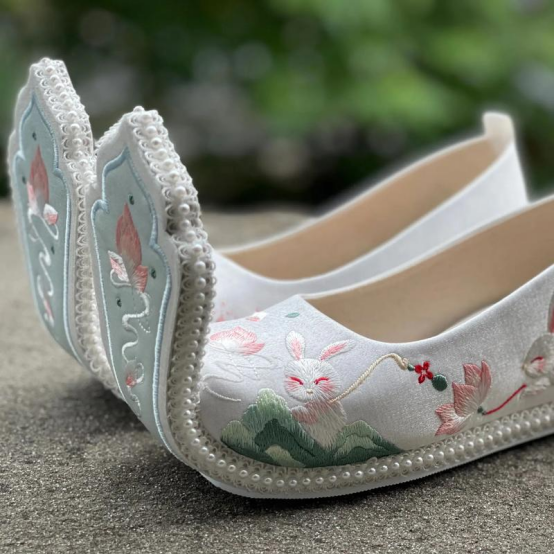
where to buy Hanfu shoes online
Affordable Hanfu Shoes at China’s Top Hanfu Stores
At the best Hanfu stores in China, we offer affordable Hanfu shoes that blend tradition and practicality. Not only do we have upturned-toe shoes—the perfect match for Tang-style Hanfu—but also improved version bound-foot style shoes (reformed for modern comfort).
Our Hanfu shoes are highly popular, especially those made with premium craftsmanship: silk Hanfu shoes, embroidered shoes, and cloth shoes all fly off the shelves.
Whether you’re looking for a pair hanfu shoes for wedding or festival event, our website has you covered. We carry a wide range of styles for every season—spring, summer, autumn, and winter. There are options for everyone: hanfu shoes for men, women, and children, suitable for both students and working professionals. These shoes pair uniquely with your qipao, horse-face skirt, or even cosplay outfits.
Best of all, all affordable Hanfu shoes are under $80—they’re truly well worth purchasing!
Shoe styles before the Tang and Song dynasties
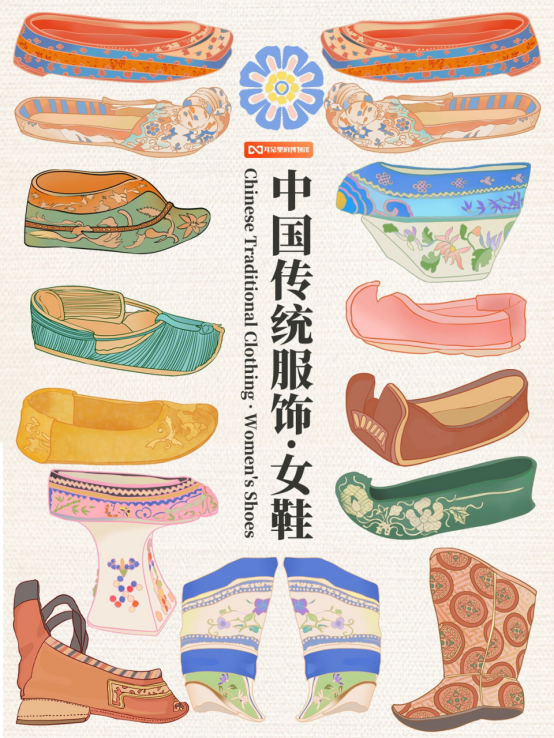
Before the Tang and Song dynasties, the styles of Chinese shoes were relatively single. Lv and wooden clogs were the main styles. By the Tang and Song dynasties, the styles of shoes gradually enriched, with typical ones such as embroidered shoes, cloud – head lv and “three – inch golden lotus”. In the north, there are traditional cloth shoes, which are famous for their thick soles made of layers of needlework, called “thousand – layer soles”. Now, it has become one of the intangible cultural heritage skills.
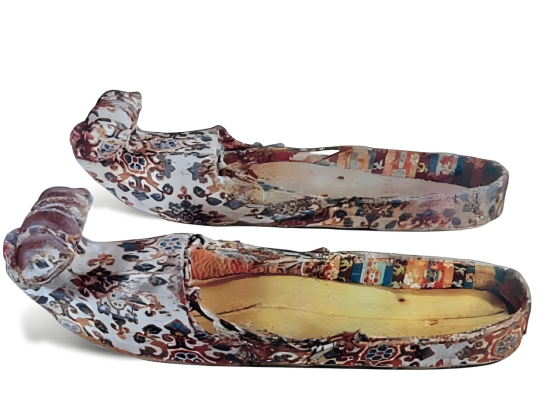
In the Tang Dynasty, high – headed cloud lv was popular. It was a kind of shoe with a high upturned toe. On the one hand, this design showed the dignity of the wearer’s manner. On the other hand, it had practicality. As we all know, ancient Hanfu clothes were relatively long, usually hanging down to the instep. So, in order to prevent the clothes from dragging on the ground and show the noble status, the toe was raised high, so that the clothes would not drag on the ground in a large area. In the Song Dynasty, compared with the Tang Dynasty, there were more styles of shoes with upturned toes, and the “three – inch golden lotus” with feudal charm also appeared.
Shoe styles in the Ming and Qing dynasties
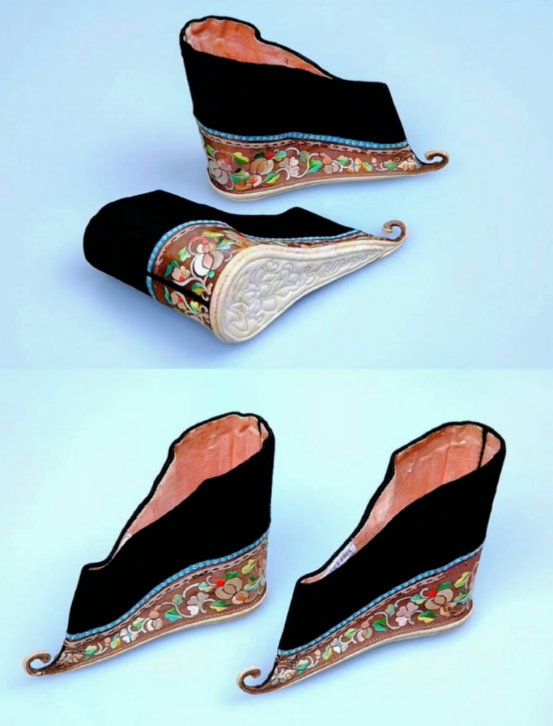
In the Ming Dynasty, square – toed cloth shoes with a wider coverage appeared. These shoes had straight lines. The overall design style was not as bold and enthusiastic as before, but the production process became more efficient, and the functionality of the shoes was improved. In the Qing Dynasty, there appeared the flowerpot bottom that we can see in film and television dramas. As long as people put it on, they can instantly grow tens of centimeters taller. At the same time, because its sole is shaped like a flowerpot, it is named flowerpot bottom. In fact, the role of the flowerpot bottom is more to show the dignity of identity and class, and it is a product of the times. Of course, most of the common people in China wore straw shoes made of coarse hemp or wooden clogs, and there were also simple cloth shoes..
Functions of traditional Chinese shoes
In terms of materials, traditional Chinese shoes are usually made of coarse hemp, woven cloth or cowhide. There are many production techniques, including those with integrated upper and sole, and those with separate upper and sole. But the goal is to make them more comfortable to wear. Chinese traditional shoes are not only exquisite in appearance, but also contain good meanings in patterns and designs. For example, shoes embroidered with auspicious clouds, red embroidered shoes for weddings, shoes for children embroidered with tigers (hoping that children can grow up strong and safe), bats (homophonic with “fu” in Chinese, implying full of good luck), carp (symbolizing more than enough every year), peaches of longevity, peonies, etc. All these wishes are concentrated in a pair of shoes, meaning “every step produces lotus flowers, every step is auspicious”.
Traditional Chinese Hanfu shoes are suitable for Hanfu lovers. They can choose shoes that match their Hanfu to form a complete and beautiful Hanfu outfit, satisfying their desire to wear Hanfu. Of course, ordinary consumers can also try to buy traditional shoes that have been improved in modern times, experience a different feeling of shoes, and feel the echo from history.
