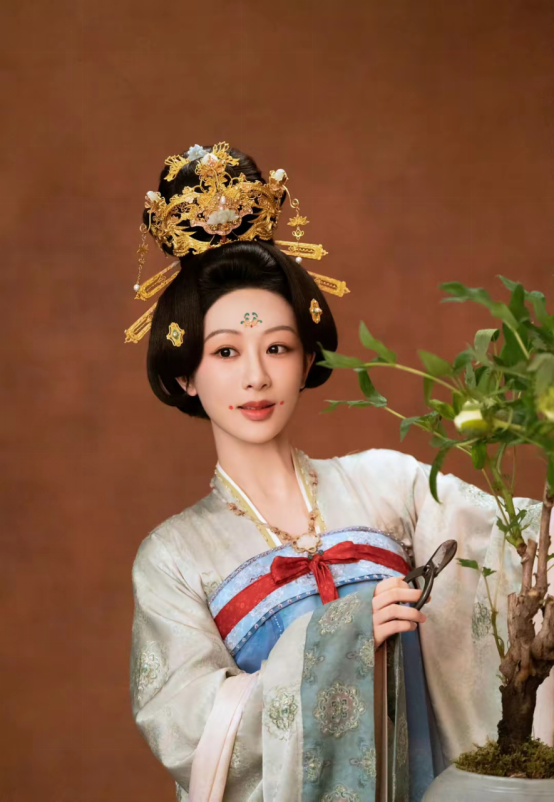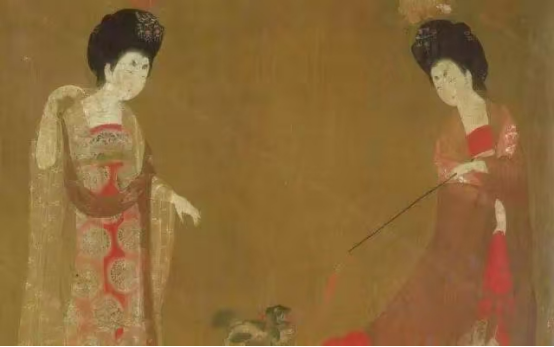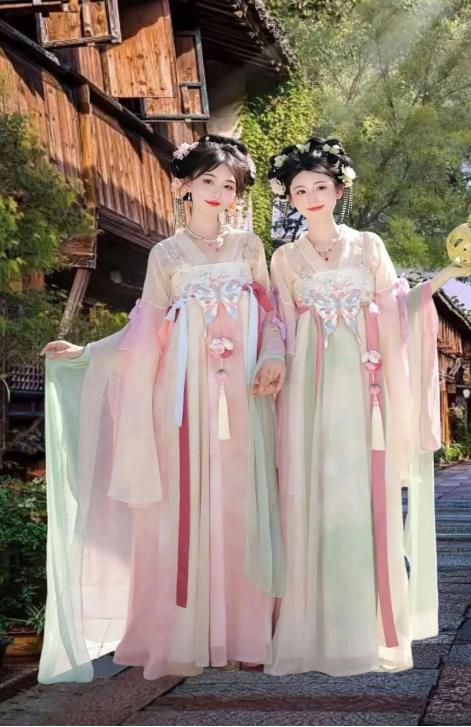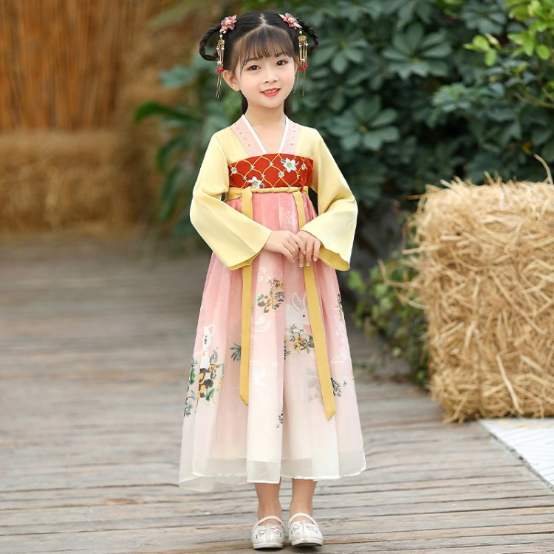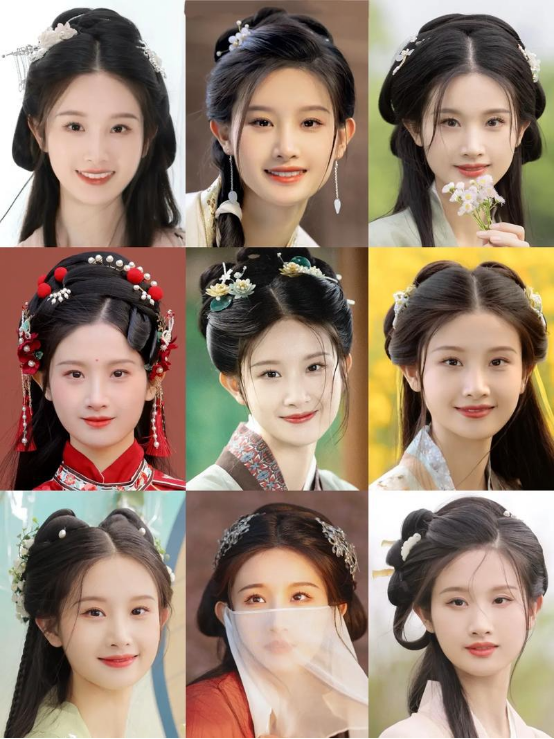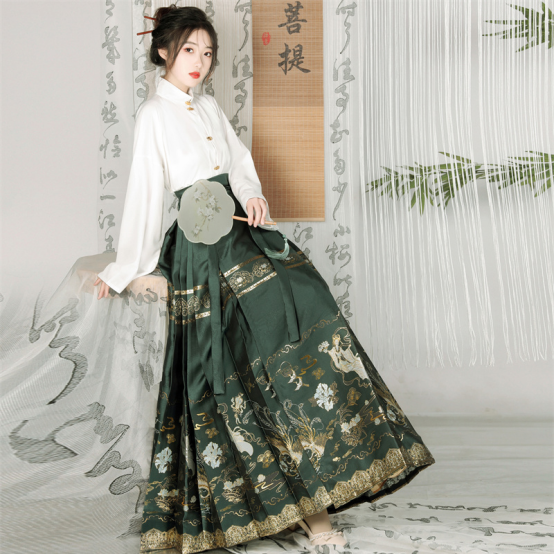

Hanfu is a precious cultural treasure of the Chinese nation. On one hand, its overall costume system embodies the life wisdom and national aesthetics of the Chinese people. On the other hand, every structure of Hanfu condenses different cultural meanings. It is for these reasons that Hanfu has been inherited, developed and continued to this day. Today, we will take Hanfu’s collar, sleeve style, waist belt and inner garment as examples to appreciate the charm of the costume contained in them.
Hanfu Collar Structure
Though small, the collar plays the role of the “soul” in the overall Hanfu. The crossed collar is the most classic style of Hanfu collars. Two front parts of the garment cross left and right to form a “Y”-shaped structure, inheriting the Huaxia etiquette tradition of “rightward overlapping of the front parts”. Its V-shaped lines can well modify the face shape, making the wearer look upright and dignified.
The standing collar is mostly seen in the collar structure of Hanfu in the Ming Dynasty. The neckline stands upright and is decorated with buttons. This design is neat and windproof, and is commonly found in styles such as Bijia (a sleeveless jacket) and vertical-collar long jackets of the Ming Dynasty.
The round collar, also known as the coiled collar, has an arc-shaped neckline. In the Tang Dynasty, this neckline design was often used for official casual clothes. Of course, the collar structures of Hanfu are far more than these, but all reflect the ancient people’s dressing wisdom of “observing human culture to transform the world”.
Hanfu Sleeve Styles and Structure
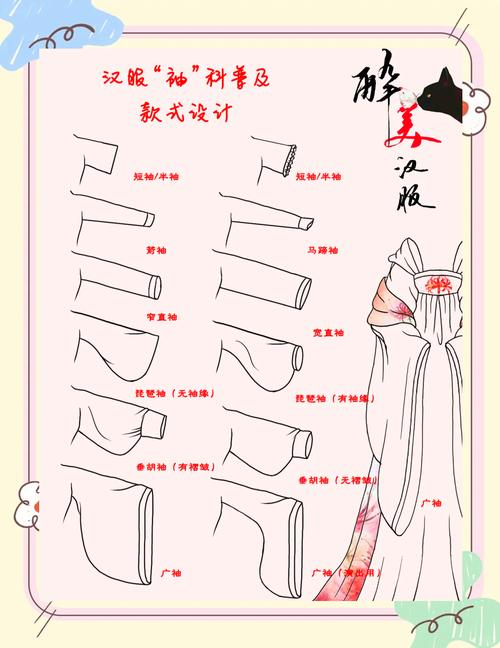
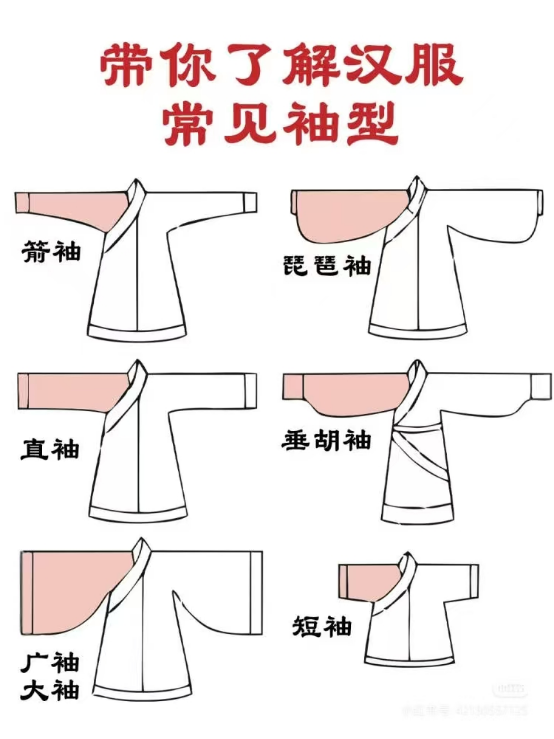
The sleeve styles of Hanfu have both ritual symbols and practical functions. Common ones include wide sleeves, pipa sleeves and straight sleeves.
Wide sleeves have always been the standard for formal Hanfu. The sleeve width can reach more than half a meter. The wearer looks dignified and elegant in every move. They are mostly used in occasions such as sacrifices and weddings, perfectly interpreting the graceful temperament of Huaxia as a “nation of etiquette with fine costumes”.
Pipa sleeves are an original design of the Ming Dynasty. The cuffs narrow to a certain size, just like the curve of a pipa. They are slim and wide, and can hold small items. The cuffs also facilitate movement. They are commonly seen in styles such as Aoqun (a jacket with a skirt) and Daopao (a traditional robe) of the Ming Dynasty.
Straight sleeves highlight greater practicality in function. The width from the wrist to the cuff is consistent. They are simple and neat, suitable for daily work and life, and were commonly worn by ordinary people in ancient times.
The length of Hanfu sleeves is also related to the structure, mainly affected by the sleeve style. As can be seen from the above Hanfu pictures, generally, the length of straight sleeves and cut sleeves mostly reaches the wrist or tiger’s mouth. Their structure is simple without excessive width, which is convenient for movement.
The length of wide sleeves and Chuihu sleeves (sleeves like the drooping beard) often exceeds the fingertips and even reaches the ground. To achieve the elegant and flowing shape, the root and body of the sleeves need to be made much wider. Some are also matched with parts such as “mei” (the large part of the sleeve) and “qu” (the cuff part), and are often used in etiquette occasions.

Hanfu Waist Belt Structure
In addition to the collar and sleeve style of Hanfu, the waist belt design is the “finishing touch”. First, the big belt is a soft belt made of wide fabric. It is used to fasten Shenyi (a traditional long garment), robes and other clothes. Generally, the length and color of the big belt often represent the wearer’s status.
Another common type of waist belt is the leather belt. As the name suggests, it is different from the big belt in material. The leather belt is usually made of leather, and decorated with jade, gold, rhinoceros horn and other ornaments on the leather. It not only fastens clothes, but also is used to hang official seals, pouches and other items.
The waist belt plays a pivotal role in Hanfu. It fastens clothes, holds items, and more importantly, embodies the wearer’s spirit and vigor.
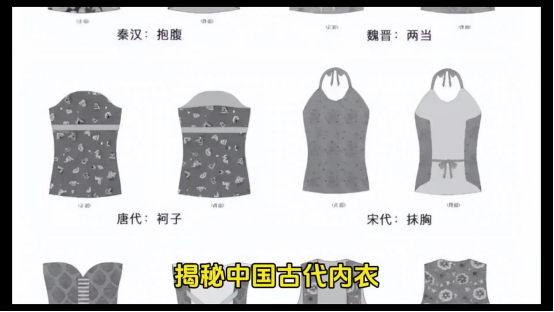
Hanfu Inner Garment Structur
There is another part of Hanfu structure that is easy to be ignored by us – the inner garment. The inner garment of Hanfu is not what we know as underwear in the modern sense. In ancient times, inner garments were mostly matched with outer garments and also helped to improve the wearing effect. Their function is similar to that of today’s underwear.
The inner garment of Hanfu is the “unsung hero” that supports the shape of the outer garment. It is often called Zhongyi (middle garment) or Liyi (inner garment). It is the closest layer to the body in the Hanfu clothing hierarchy. It is usually a plain cotton and linen shirt with a crossed collar or straight collar. Its sleeve length and garment length match those of the outer garment, forming the inner base layer, which shows the solid and stable structural composition of the Hanfu system.
All structures of Hanfu are important parts that make its system complete. Different structural designs contain the ancient wisdom of the ancients about the harmony between heaven, earth and man, and have different cultural charms.