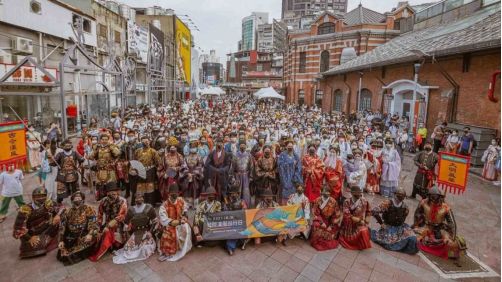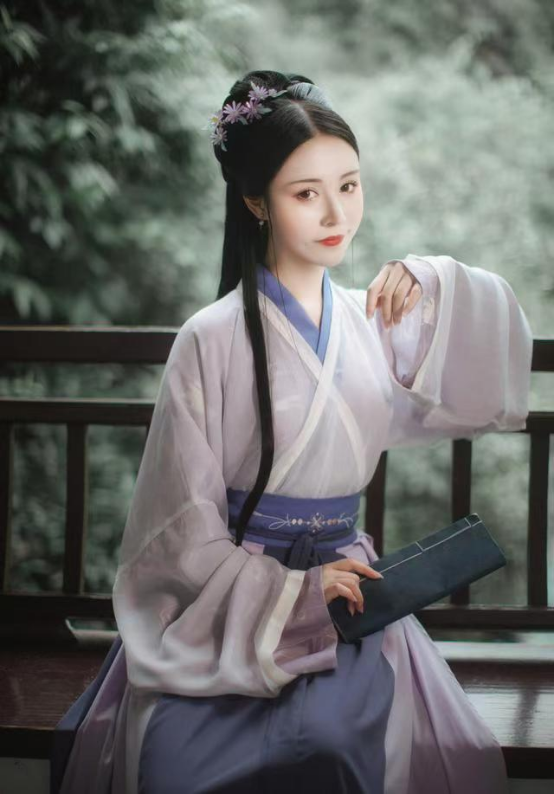
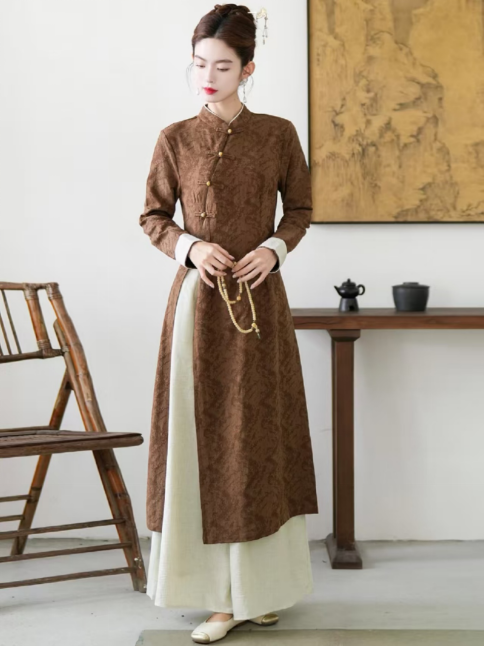
Tea attire may be unfamiliar to many people. However, its history dates back to the Han Dynasty. It is also one of China’s traditional costumes. The main reason for this unfamiliarity is that it is a professional garment suitable for tea ceremonies. It is only worn in specific tea-related scenarios. Ancient Chinese tea attire evolved from the tea ceremony. It was born for tea and serves tea. From tea attire, we can also glimpse the elegant charm of traditional Chinese clothing.
Styles of Tea Attire
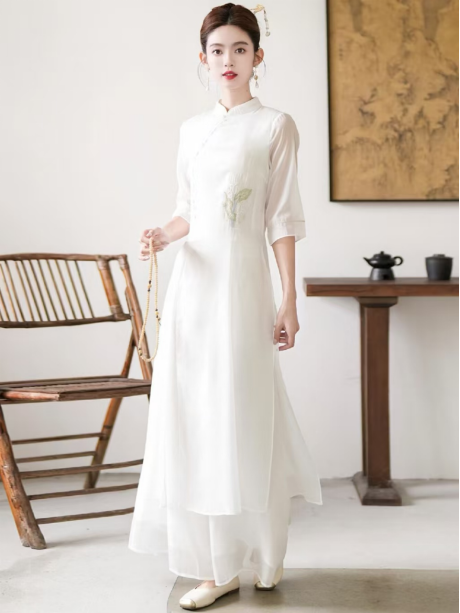
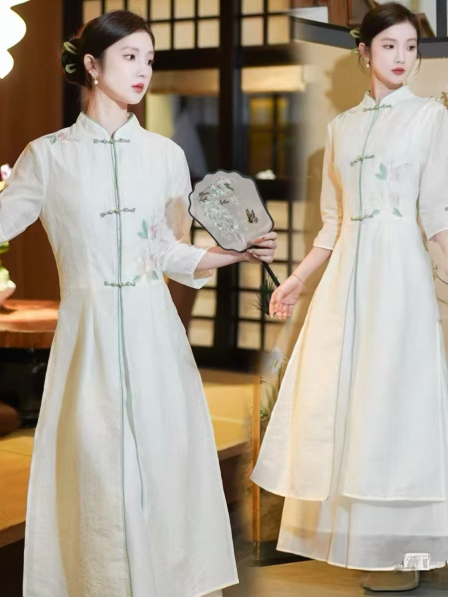
The design of tea attire essentially follows the principles of “broad and simple, simple and unadorned, comfortable, and generous”. Tea attire retains the classic elements of Chinese clothing, such as frog buttons and slanted collars. The basic structure of tea attire consists of a dress (or a top with a skirt) plus specially designed pants.
Men’s tea attire has a relatively simple style. Its structure mainly consists of a top and pants made of ramie or coarse cloth. The materials focus on lightness and naturalness.
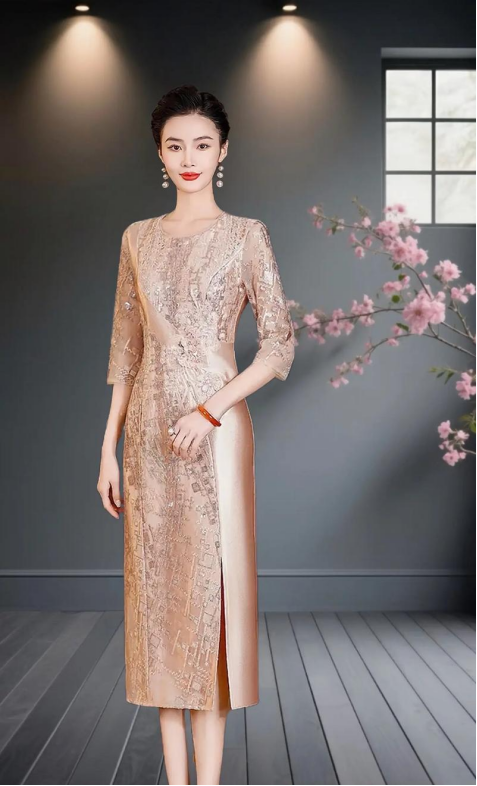
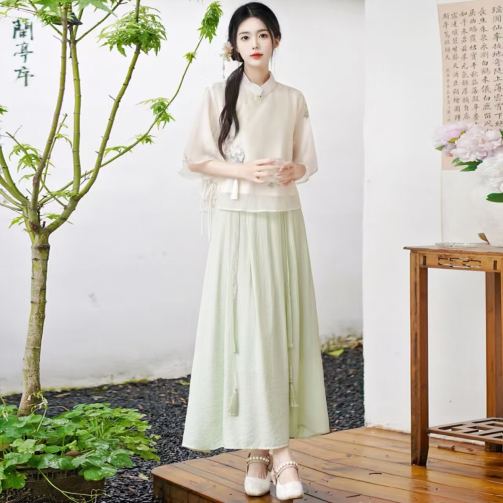
Women’s tea attire, however, mainly features a simple and elegant style. Most women’s tea attire consists of a front-opening or slanted-collar top paired with a long skirt or pants. Women’s tea attire has more cutting styles and richer colors.
There are also derivative tea attires, such as children’s tea attire. These have brought tea attire culture to more people.
Colors of Tea Attire
The color of tea attire is closely related to tea, and they even complement each other. Tea attire has light and fresh colors. These colors always convey a sense of Zen-like tranquility and elegant oriental charm.
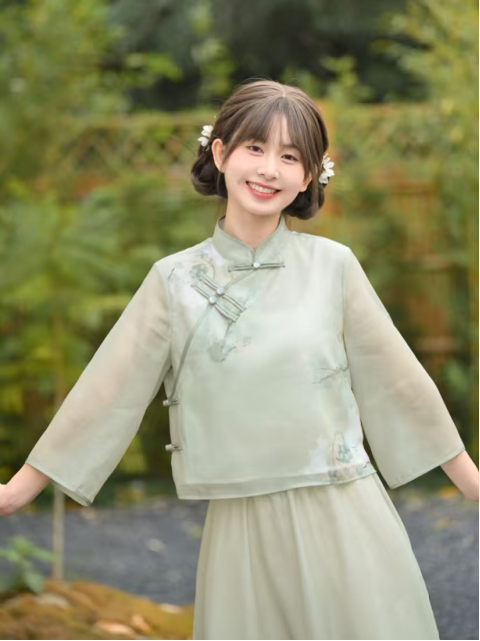
Green is the most mainstream color in the tea attire color system. This is because it matches the color of tea. In the philosophy of the tea ceremony, the color of tea attire should not be too eye-catching. It should not overshadow the main focus of tea tasting.
Besides the traditional green, tea attire also comes in fresh and soft colors. These include tea white, refreshing blue, taro purple, and soft pink. All these colors follow the basic principles of the tea ceremony. They match the tea scenarios and create a pure and calm tea atmosphere.
Tea Attire Brands
Nowadays, there are many well-known tea attire brands on the market. For example, there are small and exquisite domestic stores like Chuchan, Xige, and Balabala. Foreign big brands such as EXCEPTION and LUMINOUS have new Chinese-style tea attire designs. These designs are themed around different Chinese tea styles.
All of these brands are based on traditional Chinese tea attire elements. They combine modern aesthetic needs and have launched tea attires with unique characteristics and charm.
Tea Attire VS Other Clothing
Tea attire is different from daily clothing. It embodies the charm of China’s thousand-year-old tea culture. Although in modern society, tea attire can be worn as daily clothing, its close connection with tea culture may cause some misunderstandings if you wear it casually. Therefore, it is more appropriate to wear tea attire in formal tea ceremonies.
Tea attire is also suitable for people of all age groups. There are corresponding styles and categories of tea attire for children, young people, and the middle-aged and elderly. It is obvious that tea attire culture has covered all age groups.
When it comes to the differences between tea attire and Hanfu (traditional Chinese Han clothing), the biggest difference is that Hanfu emphasizes traditional structure and etiquette. It has a complete clothing system, complex styles, and gorgeous elements. Tea attire, however, focuses on practicality and comfort. Its styles are mostly simple, with no too many ritual norms. It has a more flexible structure and no complex patterns for decoration. These are the biggest differences between tea attire and Hanfu.
Suggestions
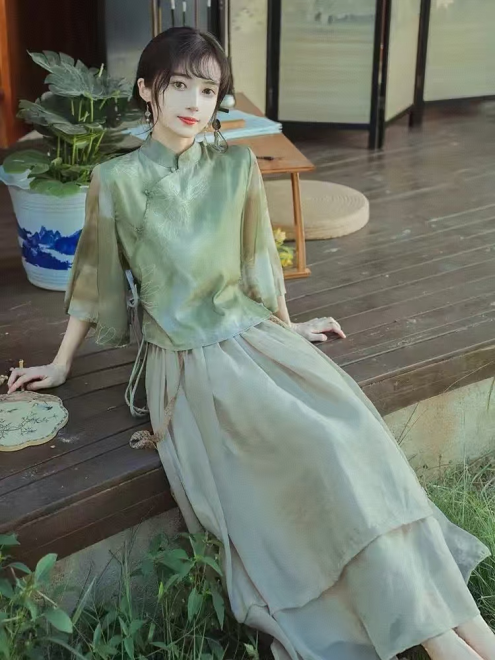
A friend of mine just consulted me. She is going to an afternoon tea party and asked me what to wear. Taking this opportunity, I would like to share my suggestions with everyone.Focus on elegance and comfort. Choose a short front-opening shirt with a midi skirt or wide-leg pants. It is convenient for activities and also enhances your temperament.Prioritize fabrics like cotton-linen and ramie. They are breathable, skin-friendly, and have a natural texture.Choose light colors such as off-white, light cyan, and elegant gray. These colors make you look gentle and graceful.Add small details like delicate frog buttons and fine embroidery. They fit the relaxed ceremonial feeling of the tea break and help you integrate into the atmosphere easily.